
A Spoke in the Wheel: When Daydreams Meet Deadlocks
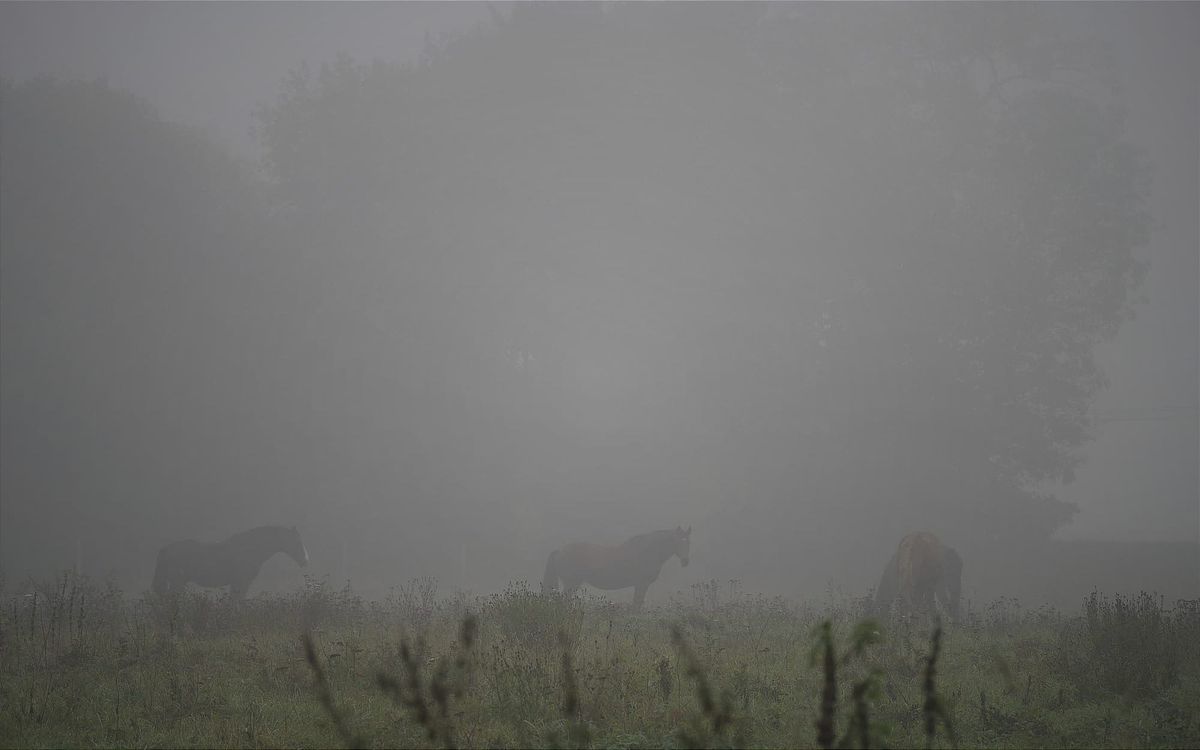
Just two months after moving into our new home, I was looking out the bedroom window on a particularly misty late-summer morning. For some reason, I saw horses galloping across the overgrown fields in my mind’s eye. I had ridden as a child, but it had been years since I’d even touched a horse. Still, the vision stuck.
Since I knew nothing about horse keeping, I thought it was "smart" to start at a riding school. But this isn’t a horse blog, so let’s fast forward: everything went exactly as "planned," and 14 years later, I found myself the owner of three horses. Two were ready for retirement, and that bedroom-window dream was about to become a very loud, very hungry reality.
The "Simple" 2019 Plan
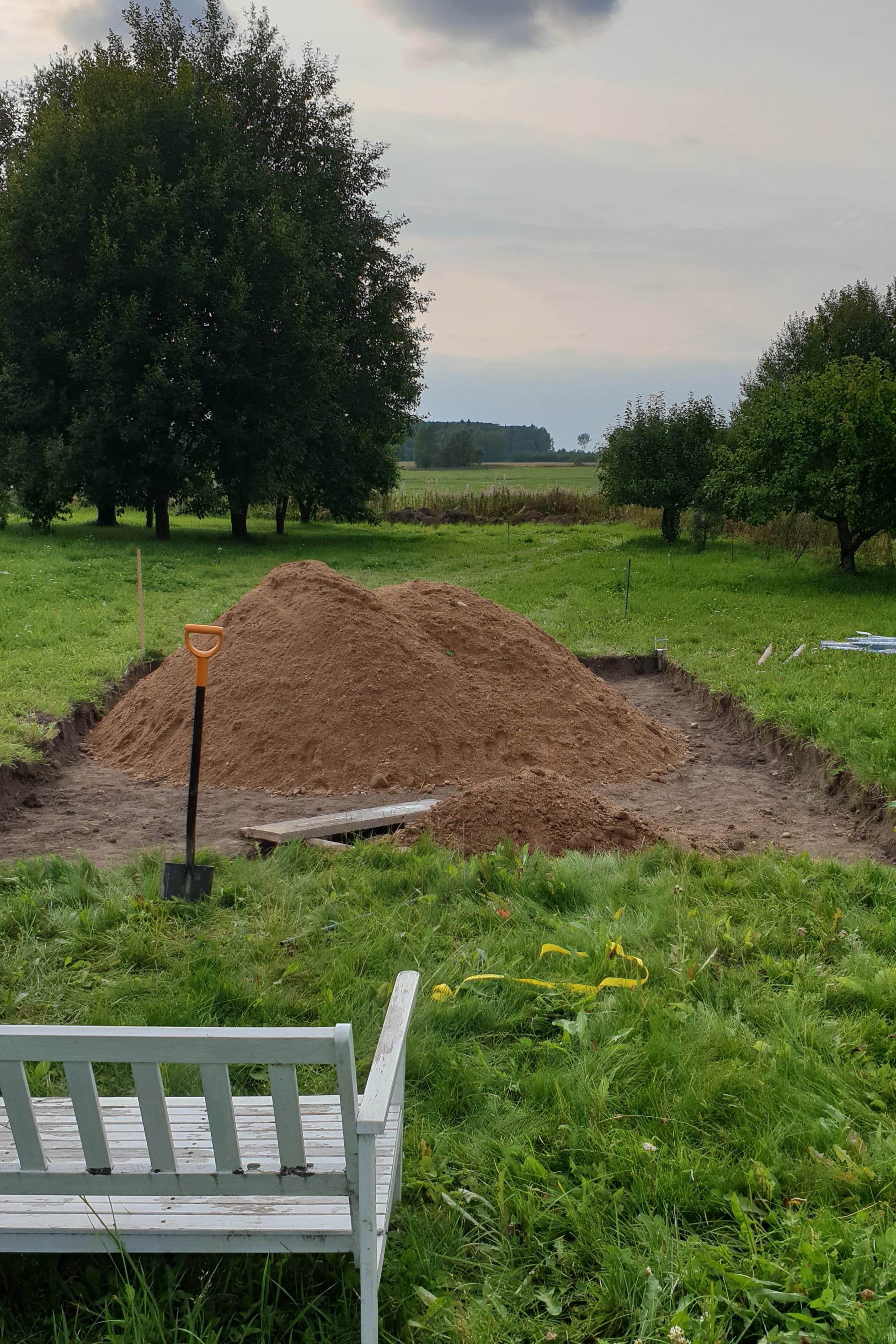
August 2019 was spent gathering materials. By September, Heiko brought out his trusty shovel to prep the ground. The design was a two-part sanctuary: an open shelter with a heated drinker for the horses and a secure, closed tack and feed room.
Heiko couldn't just build a "shed." He insisted on redoing the beam ends, carving them into decorative profiles that echoed the traditional architecture of the main house. It was a touch of estate elegance for a building mostly destined to hold hay and horse hair.
Engineering the "No-Mud" Zone
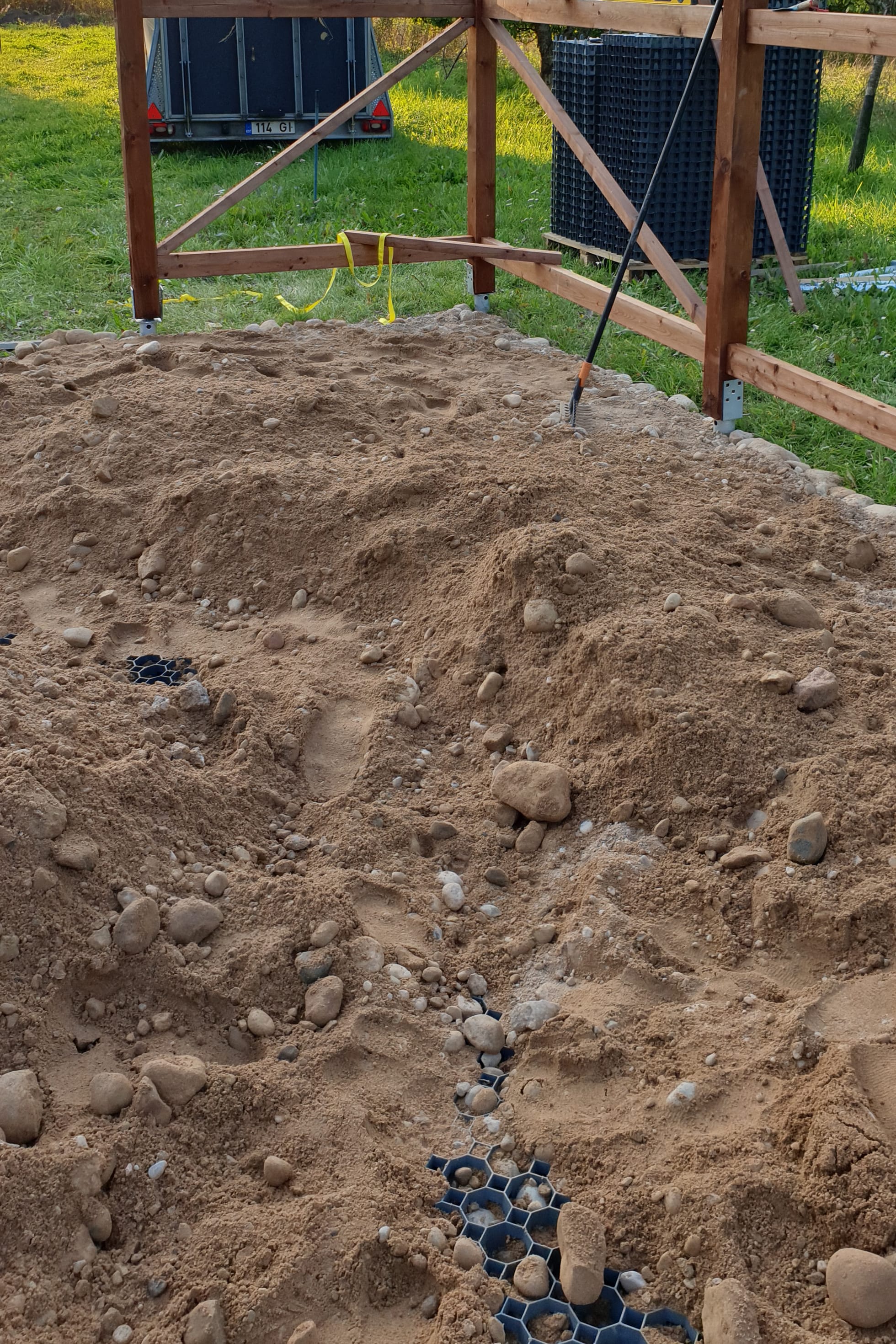
Building a stable in Estonia is a battle against the elements. To prevent the area from turning into a "mud smoothie," we reinforced the ground under the shelter with heavy-duty plastic grids—those honeycomb thingies that prevent hooves from churning the earth into a bog. We filled the cells with sand to create a stable, permeable surface that stays dry even when the autumn rains hit.
The Great Legal Loophole: Life on Metal Stilts
You might notice that the shelter isn't sitting on a traditional concrete foundation. Instead, the entire structure is elevated on adjustable metal stilts (post anchors). We chose this for two very "rational" reasons. First, there’s the hope that we might want to move it someday—though, knowing us, once a building is up, it usually stays put.
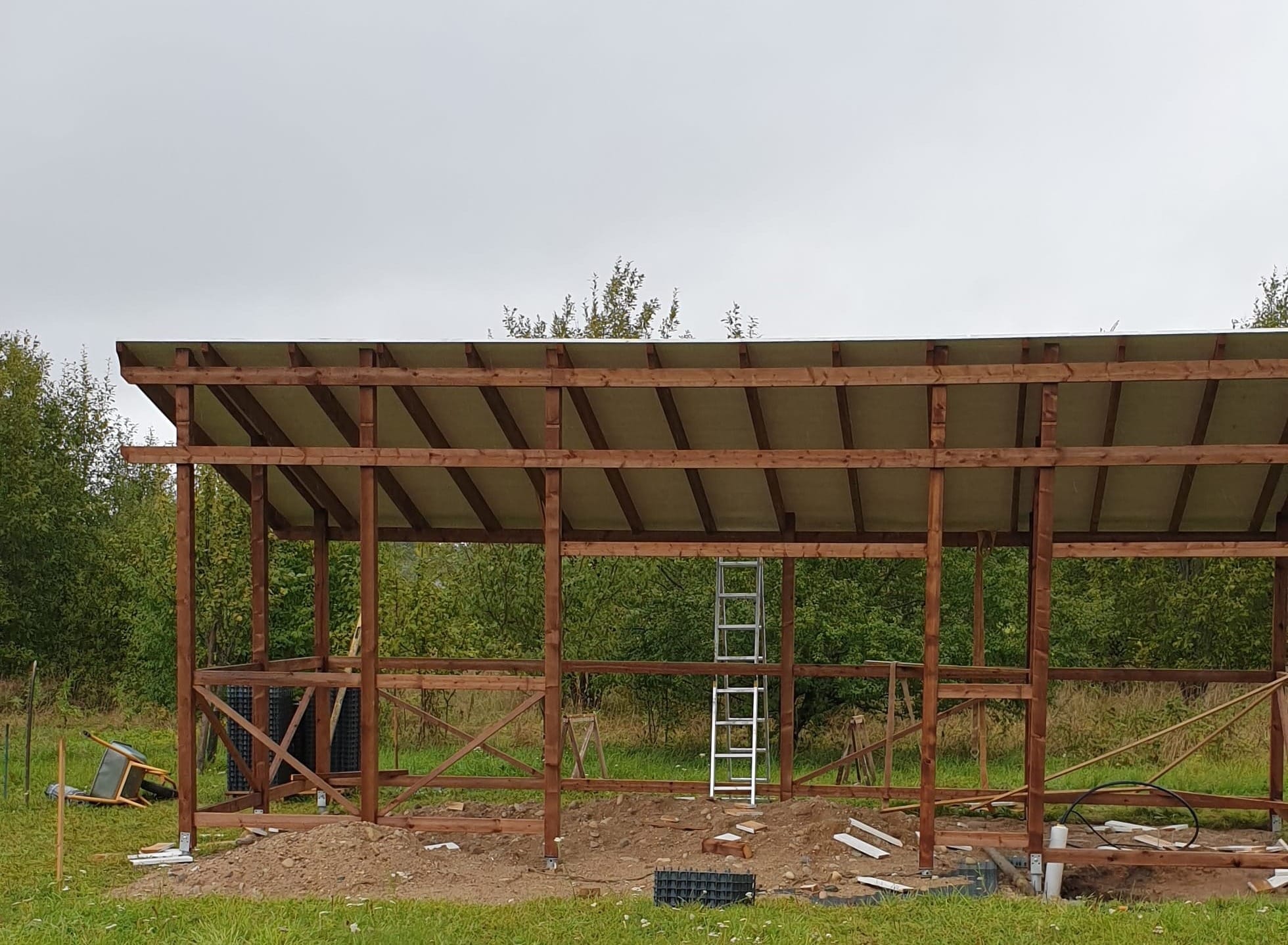
Second, and more importantly, were the Estonian building laws. By keeping the shed on stilts rather than a permanent concrete slab, it remains a "temporary or movable structure" in the eyes of the authorities. This allowed us to bypass the mountain of red tape required for a permanent agricultural building, while still giving us a sturdy, level sanctuary for the horses. It’s a bit of architectural gymnastics that keeps both the horses and the local municipality happy.
Of course, metal brackets and horse legs are a recipe for disaster. To keep our pensioners safe, hid the metal stilts inside the wooden posts. By hollowing out the base of the timber, the metal is tucked away out of sight and out of reach. Where possible, we even took it a step further and hid these connection points beneath a thick layer of straw bedding. This ensures there are no sharp metal edges for a horse to catch a hoof or leg on, leaving the environment as natural and safe as possible.
The Battle of the Frost Line
Then came the "umbilical cord"—water and electricity. We rented a mini-excavator, allowing Marti to fulfill his dream of being a heavy machinery operator (while simultaneously babysitting three-year-old Leon, because boys and tractors are an inseparable duo).
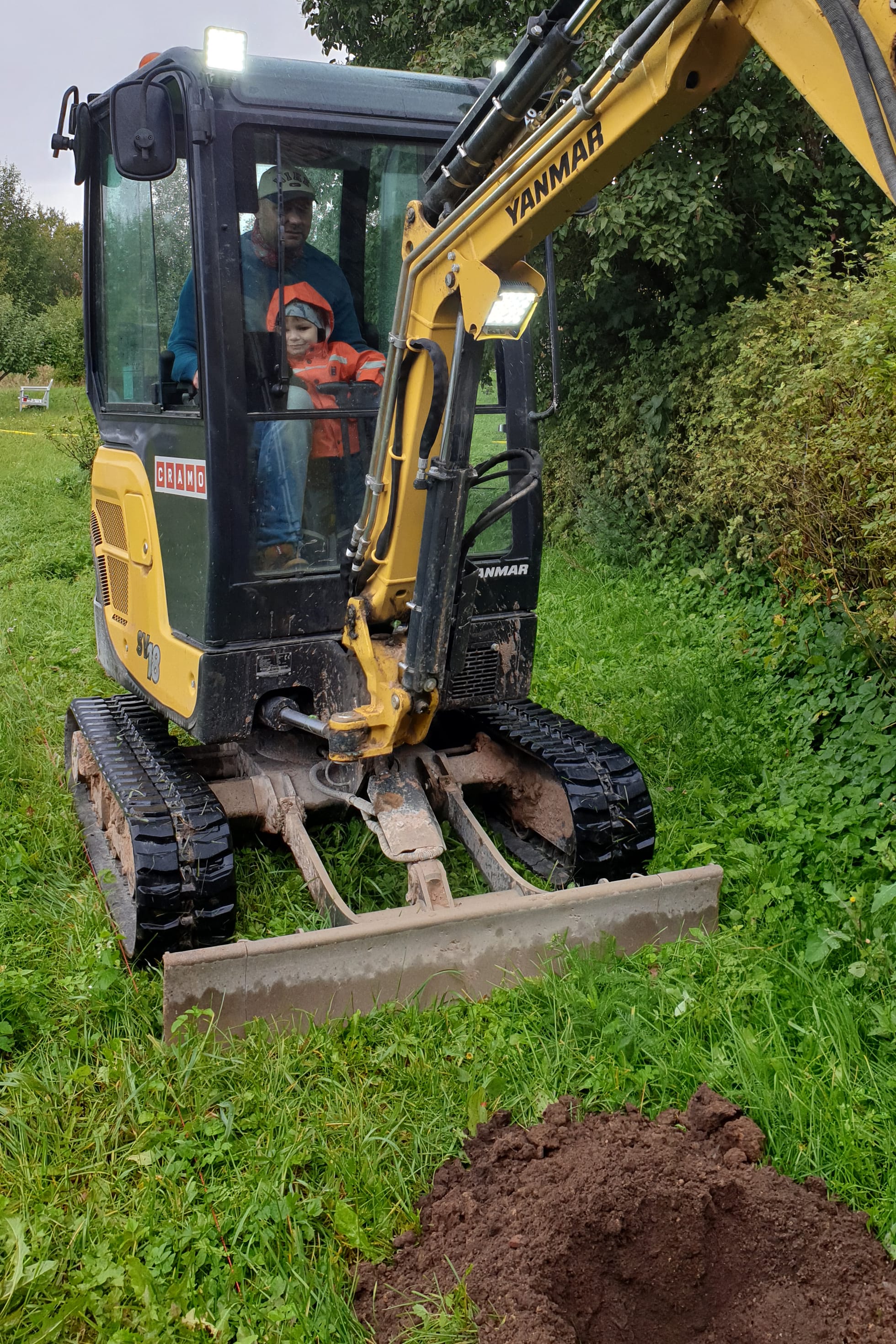
We were determined to be "lazy," so we went all out on the plumbing. In Estonia, the frost line can reach 0.6 to 1.35 meters deep, depending on the region. Our pipes are buried at 1 meter and packed them with heating cables.
The "Nailed It" Reality: Despite our engineering, nature usually wins. Every winter, we still end up hauling water because some tiny above-ground joint manages to freeze or "give up the ghost" at -25°C.
The Math of the Roof
We designed the shelter roof with the same logic as the main house: a steep angle to handle the snow pressure. In Estonia, a single winter storm can drop 120 tons of snow onto a large roof—the weight of 80 cars. 45 degree slope ensures the snow slides off naturally, but it also means we needed proper rain pipes.
Without gutters, the massive runoff from the roof would create a "moat" around the shelter, eroding the foundations and turning our sand-filled paddock back into a swamp. The drainage system carries that water safely away, protecting the structure from the destructive cycle of "freeze and thaw."
Idyll Realized (Sort of...)
The first paddock was a 40x50m stretch of greenery with willow trees for shade. Because Heiko insists that every post be perfectly level and every line straight, the fencing took ages, but the result was a fortress of precision.
By the end of the month, working between torrential downpours, we made the final push. And there they finally were: living outside my bedroom window, exactly as I had imagined 14 years ago. Our little stable was almost ready, the idyll was complete, and I couldn't have asked for anything more.
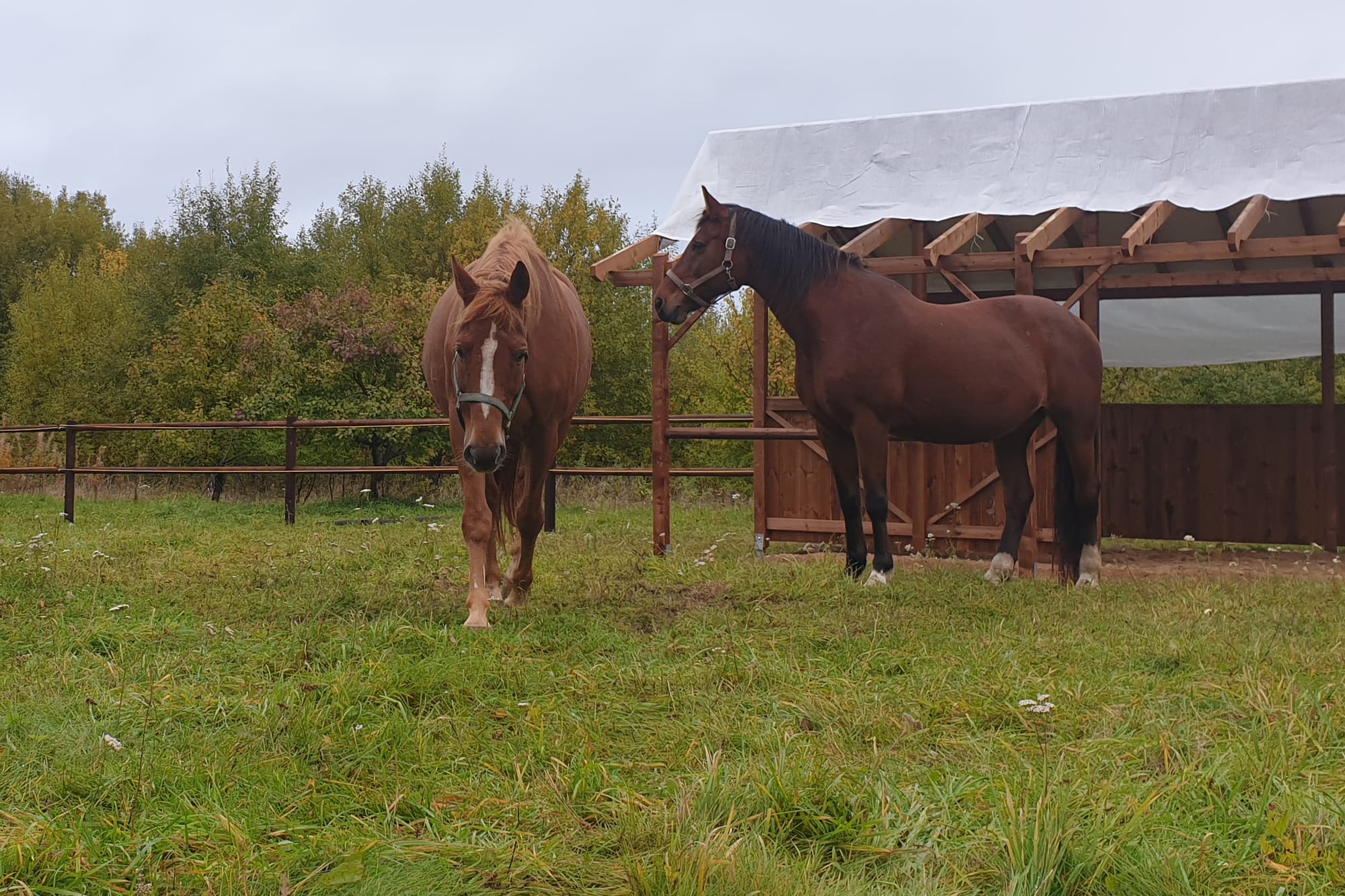
Well... almost. But that is a story for the next chapter.
-Liidia