
From Mud to Masterpiece: The Four-Year Dig
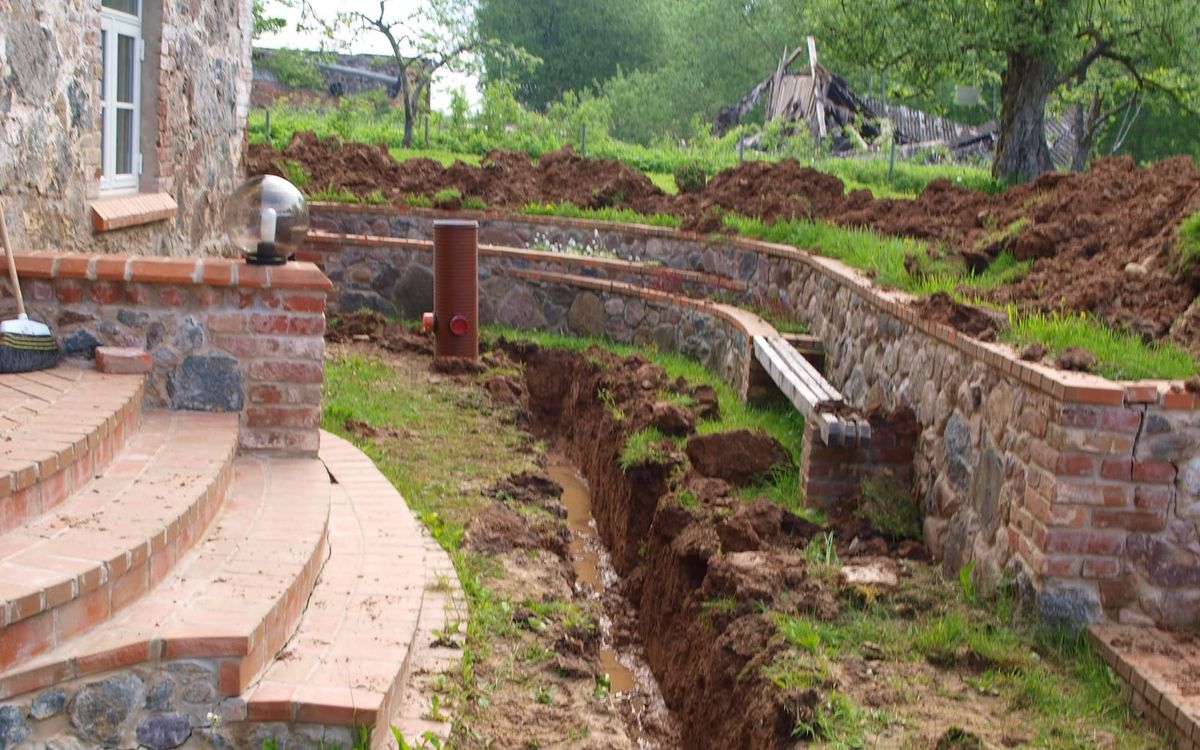
If you were to walk by our home today, you would see a serene stone entrance and a house that is finally finding its footing with its new brick stairs. But back in 2007, you would have seen something resembling an archaeological disaster zone. To understand how we got from "The Great Dig" to "The Great Reveal," we have to look at the four years that redefined our relationship with this old estate.
2007: The Battle Against the Earth
By 2007, the honeymoon phase of our homeownership was over, replaced by a much grittier reality. Over two centuries, the ground level around the building had steadily risen. Our massive fieldstone walls were being swallowed by nearly a meter of soil, trapping moisture and threatening the structural integrity of the house.
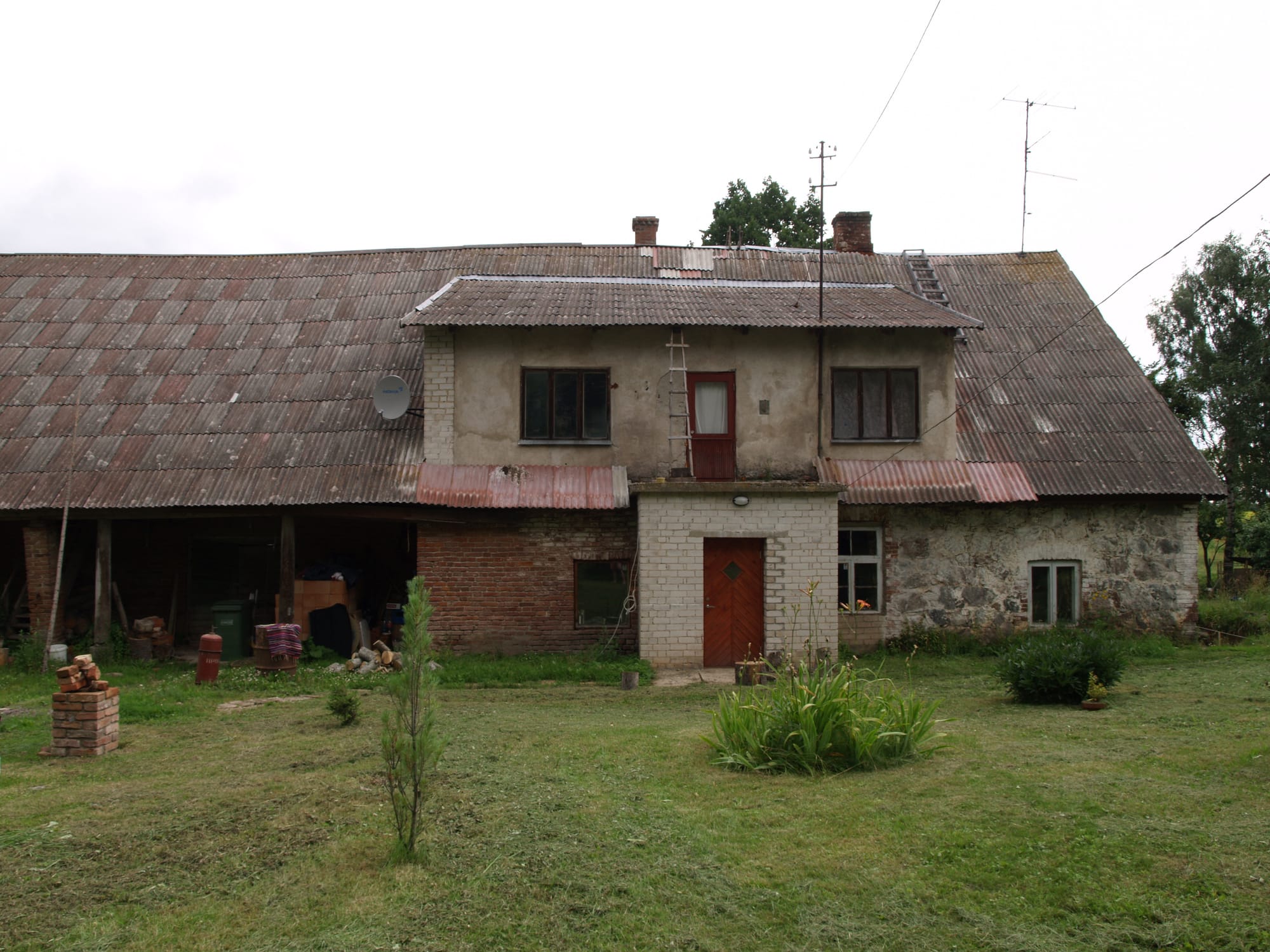
The mission was simple but brutal: we had to dig. We needed to excavate the entire perimeter to expose the original 18th-century foundations so the stone could finally breathe. In our youthful naivety, we thought this would be a quick weekend project. It turned out to be a four-year odyssey.
The Man, The Shovel, and No Tractor
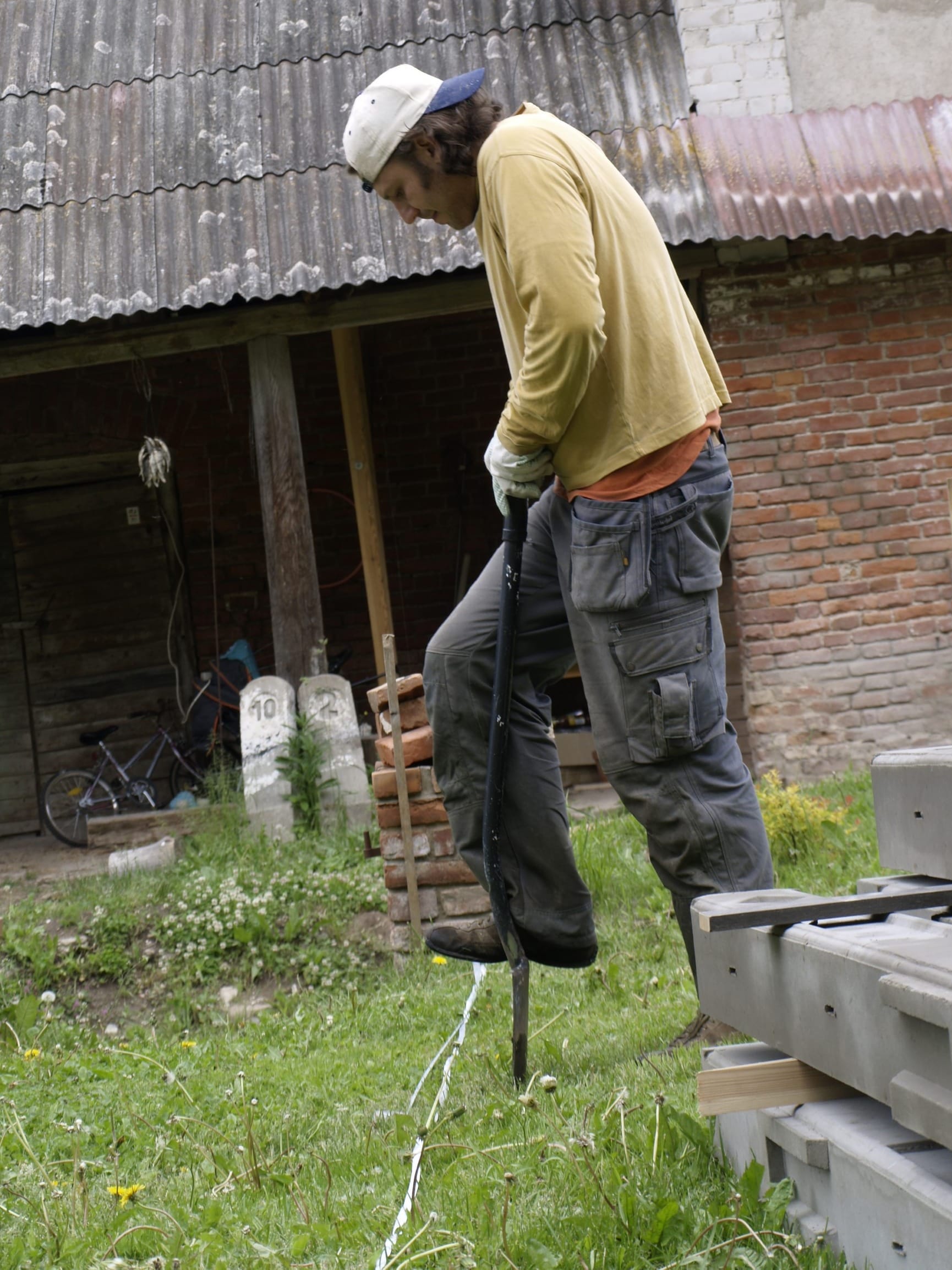
In the photos of the deep trenches, it’s easy to assume we had heavy machinery to help move several centuries' worth of dirt. The truth is much more exhausting: Marti didn't even have a tractor back then. Almost every single cubic meter of soil—literal tons of earth—was moved by hand. This wasn't just "gardening"; it was a structural rescue. Days spent in the mud, unearthing the building's original dignity shovel-full by shovel-full. To make matters more interesting, we only had one shovel at the time, so the guys took turns digging—occasionally getting a 'helping hand' from visiting relatives and friends. Long hours were spent by the trench: one man digging while the other sat exhausted, drinking a beer and contemplating the endless piles of dirt coming out of that hole. The heavy machinery came into play in the last stage of the project - to install the drainage around the whole house.
2011: Finding Our Level
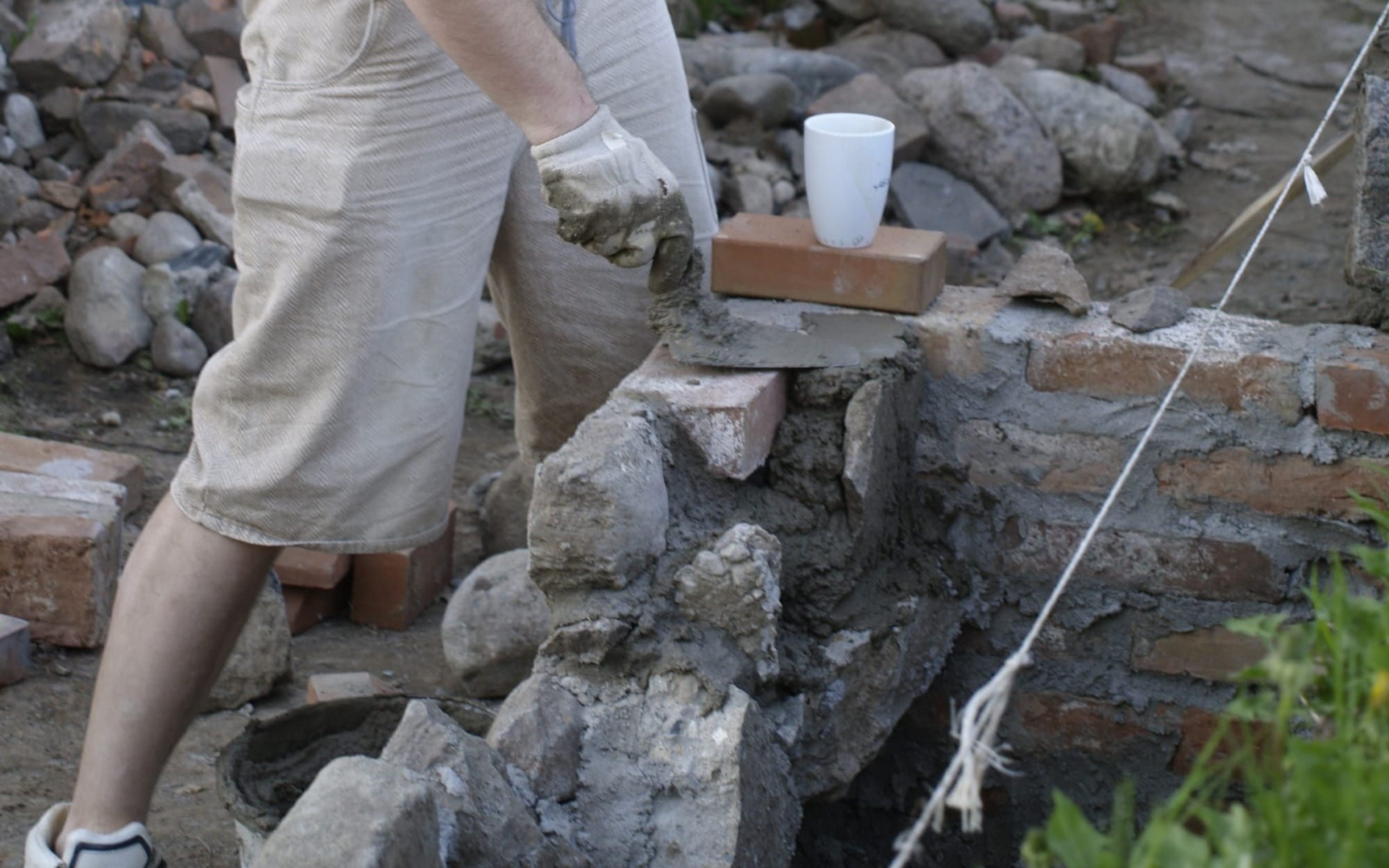
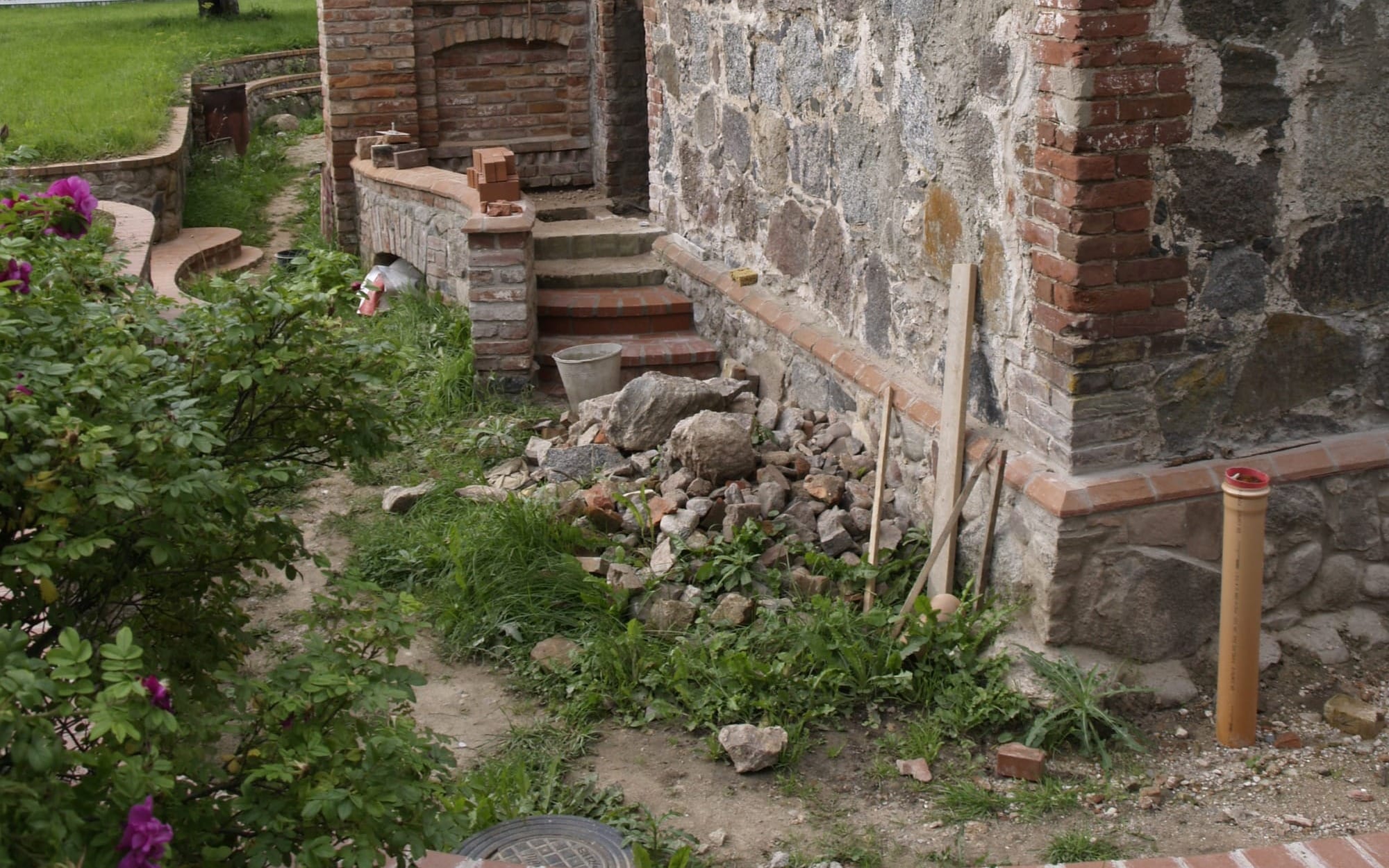
Fast forward to 2011, and the trenches were finally gone. But we didn't just fill them back in; we rebuilt the landscape into something permanent. Once the house was safe from the damp, the focus shifted from excavating to creating.
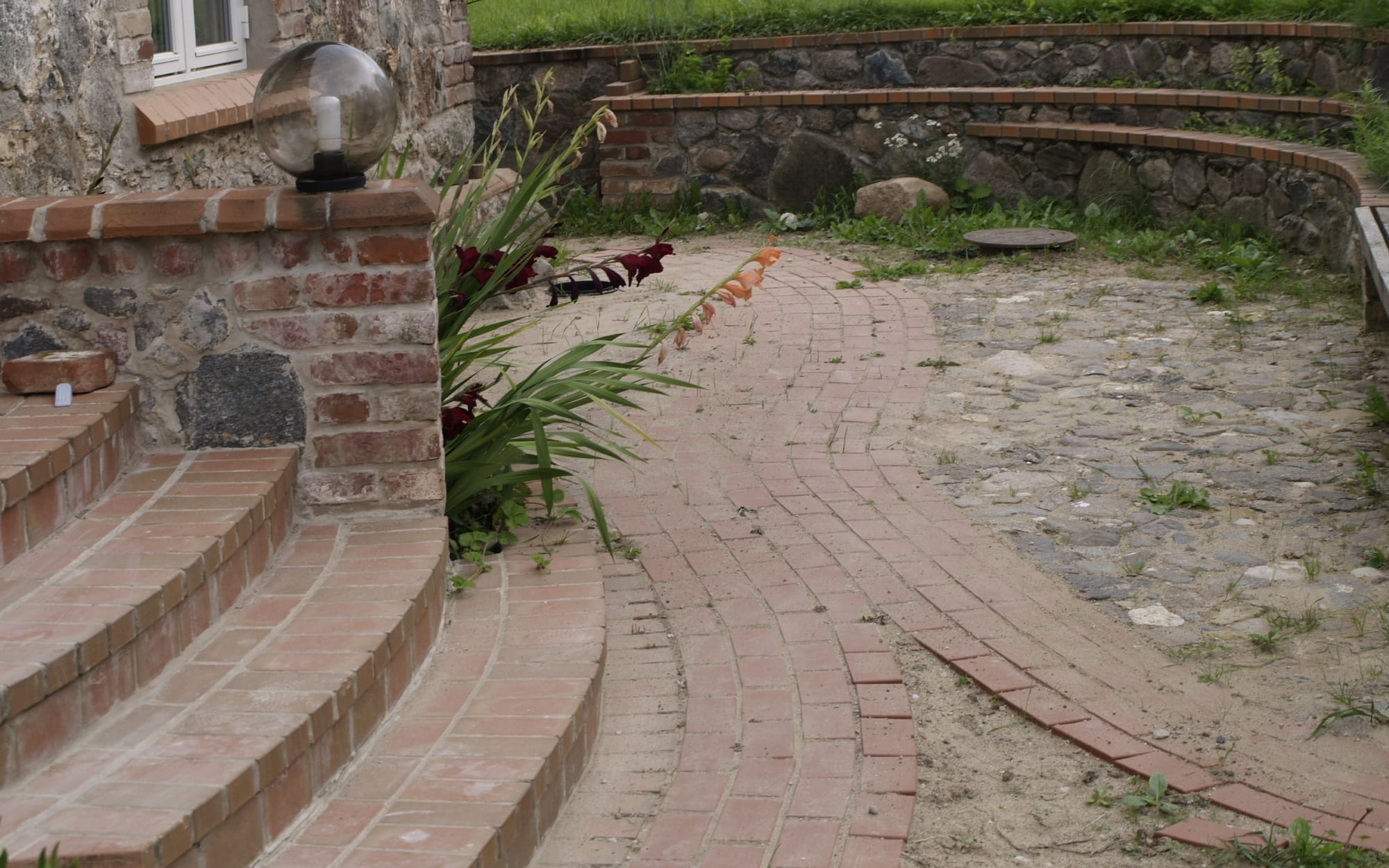
- The Retaining Walls: The tiered stone walls were hand-built using traditional fieldstones and red brick accents to match the house’s original heritage.
- The Steps: The new brick steps were meticulously laid, creating a grand entrance that felt like it had always belonged to a manor outbuilding.
- The Light: We topped the new pillars with globe lights, finally bringing a sense of warmth to a corner of the estate that had been buried in the shadows for decades.
The Full Circle
In 2007, we were covered in mud and living in a construction site that felt like it had no end. By 2011, we could finally stand on our new brick steps and look out over a garden that was no longer threatening to swallow our home. We’ve learned that when you don’t have a tractor, you have to have a lot of patience. It took four years to climb out of that hole, but standing there now, knowing every stone was placed with intent...
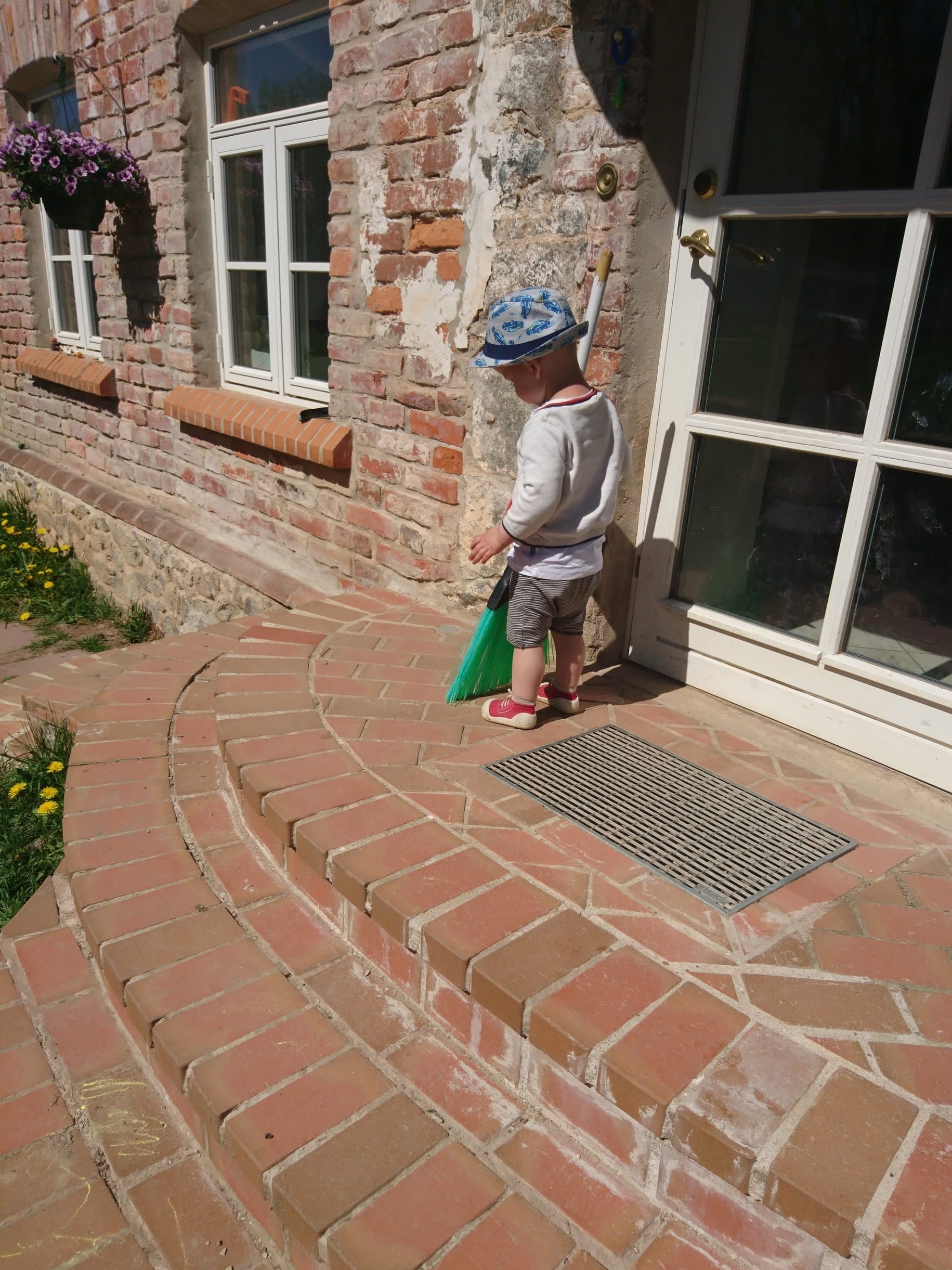
While the whole trench is still not paved, and we’ve had to revisit the steps and walls to fix the ongoing battle with the moving earth, we still love the outcome. The moss slowly claiming the stone and the natural cracks forming between the bricks make it look as though it has always belonged with the house.
Guests have even pondered how lucky we were to have "dug this structure out"—as if we simply brushed away some dust to find a masterpiece. We usually just smile and think of that single shovel and the four years of mud, knowing that "luck" in this house is usually just another word for persistence.
Nailed it! Sort of... (The earth still moves, but so do we.)
-Liidia